How to Become a Builder in the UK: Apprenticeships, the APL Shortcut — and the Leap From Day Rate to Building Firm
"Builder" is the construction industry's broadest word — it covers the multi-skilled tradesperson running domestic jobs, the site operative on a card, and the firm owner quoting extensions. The routes in are correspondingly flexible, but they all pass through the same two gates: a recognised qualification and the CSCS card. Here's the honest 2026 map, from first course to first company.
In short: Three entry routes — the apprenticeship (earning £15,000–£22,000 while training), college courses (£1,000–£5,000) or fast-track intensives (2–12 weeks, £3,000–£10,000) — converging on the NVQ Level 2 and the CSCS card most sites require. Experienced-but-unqualified hands can use the APL route (6–12 months, cheaper than a full NVQ). Self-employed day rates then run £250+, and the firm-owner path sits above that.
The three ways in
| Route | Cost / pay | Best for |
|---|---|---|
| Apprenticeship | earns £15,000 – £22,000 while training | School leavers and anyone who can take training wages |
| College course | £1,000 – £5,000 | Those without an apprenticeship place, building toward site entry |
| Fast-track intensive | £3,000 – £10,000, 2 – 12 weeks | Career changers with savings who need speed |
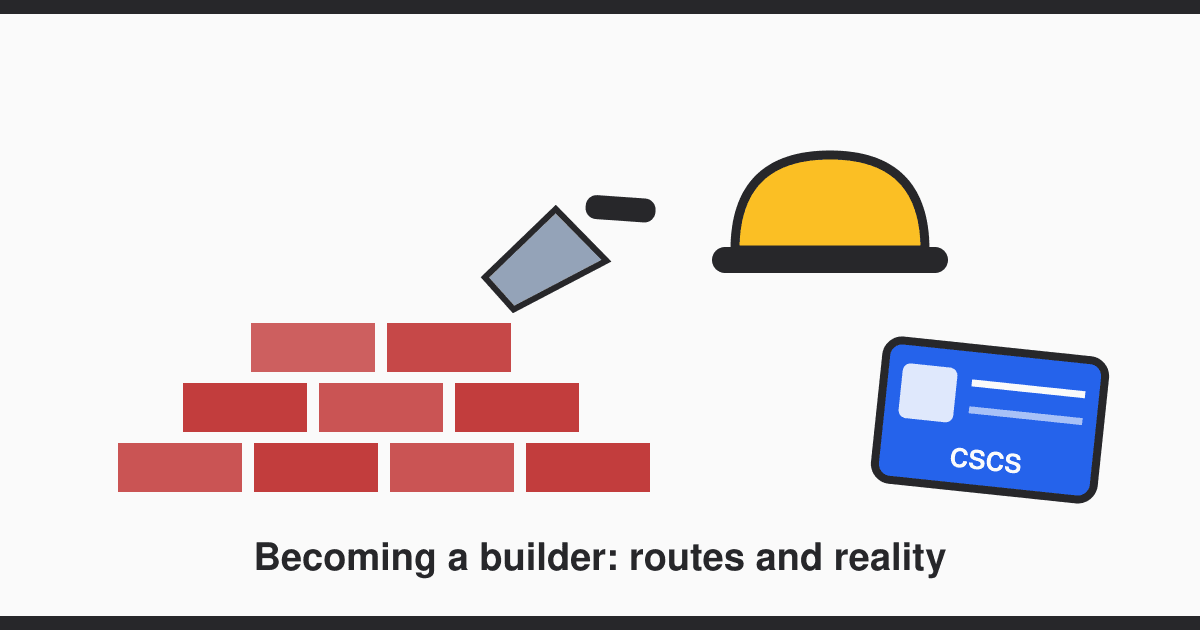
Whichever door you take, the destination is the same paperwork: the NVQ Level 2 in Construction Operations (or a trade-specific NVQ) plus the CITB health, safety and environment test, unlocking the CSCS card that gets you through site gates — with the Blue Skilled Worker card following at NVQ Level 2/3 in your trade.
The APL shortcut for experienced hands
Years on the tools without paper? The Assessment of Prior Learning route has an assessor sign off your existing competence over 6–12 months — typically cheaper than a full NVQ programme and the standard fix for skilled workers blocked from commercial sites by missing cards. The construction industry runs on this route more than its brochures admit.
The real fork: day rate or building firm
Qualified, carded and experienced, you reach the decision that defines building careers:
- Self-employed on day rates: £250+ a day is achievable — multiply by pipeline reliability, subtract van, tools, insurance and quiet Januaries. Maximum freedom, income tied to your own two hands.
- The building firm: quoting whole jobs — extensions, refurbs, loft conversions — subcontracting trades and carrying the programme. The earnings ceiling lifts dramatically; so does the responsibility: pricing discipline (the budgeting mathematics customers see is your quoting textbook), building regulations and planning rules as working knowledge, and cashflow management as the true survival skill — most small building firms that fail, fail on cashflow while profitable on paper.
- The trust economy: in domestic building, reputation is the licence. FMB membership isn't a qualification but signals competence clients actively look for — and everything in how customers vet builders is your marketing checklist read from the other side.
The skills that make "the builder": unlike single trades, the domestic builder's value is breadth — competent across groundwork, brick, carpentry and making good, and fluent enough in plumbing and electrics to coordinate the certified specialists (never to substitute for them: Part P and Gas Safe boundaries are absolute). That breadth is built deliberately: multi-trade experience early beats deep specialisation for this particular path.
The bottom line
Pick the entry route your finances allow, collect the NVQ and CSCS card that open the gates, build multi-trade breadth — then choose between £250+ day-rate independence and the firm-owner path where quoting discipline and cashflow decide everything. The industry is short of good builders at every level; the ladder is genuinely climbable. For homeowners on the hiring side: find vetted builders near you here.
Frequently asked questions
No licence exists, but most sites require a CSCS card — which needs a recognised qualification (typically NVQ Level 2 in Construction Operations or a trade NVQ) plus the CITB health, safety and environment test. Routes in include apprenticeships, college courses (£1,000–£5,000) and fast-track intensives.
If you have genuine site experience, yes — the Assessment of Prior Learning (APL) route has an assessor sign off your existing competence over 6–12 months, typically cheaper than a full NVQ programme, unlocking the CSCS card commercial sites demand.
Apprentices start at £15,000–£22,000; self-employed builders achieve day rates of £250+, multiplied by pipeline reliability. Firm owners quoting whole projects sit above day-rate earnings — with pricing discipline and cashflow management deciding how far above.
Breadth and coordination: a domestic builder is competent across groundwork, bricklaying, carpentry and finishing, and coordinates certified specialists for controlled work (electrics under Part P, gas under Gas Safe — never DIY substitutes). Running whole jobs rather than single trades is what defines the role.